More and more people are skipping the search bar and typing something like, "Can you recommend a therapist for trauma near me?" into ChatGPT. If you've wondered how to show up in those ChatGPT therapist recommendations, you're asking the right question, and you've probably also seen a lot of hype around it.
Here's the reframe: you can't "optimize for ChatGPT" the way you'd tune a campaign. Nobody outside those companies knows exactly how the answers get built, and the answers change from one run to the next. What you can do is make your practice easy for any system, human or machine, to find, describe accurately, and trust. That's a clarity problem again, and it's one you can work on this month.

What Actually Happens When a Client Asks
When someone asks an AI tool for a therapist, the tool doesn't know your practice personally. It pulls from public information: your website, directory listings, maps profiles, and anything else it can find and read. Then it puts together an answer that sounds confident.
That has two implications. First, if your information is thin, scattered, or out of date, the answer about you will be thin, scattered, or wrong. Second, if your information is clear and consistent everywhere, you give the tool much better material to work with. You don't control the answer, but you do control the raw material.
What We Know, and What We Don't
I want to be upfront here, because this topic is full of people selling certainty. Most of what's published about AI search for therapists comes from companies that sell website or marketing services, and the data is small. One example is an analysis from a therapist website company that tested 96 answers across a few local searches in two metro areas over one week. Its main finding was that most answers cited at least one individual practice's own website, and that many also pointed to a big directory like Psychology Today.
That's interesting, and it fits common sense, but I wouldn't build a strategy on one vendor's numbers. The honest summary is this. Your own website and your major listings seem to matter. Nobody can promise you a spot in an AI answer. And anyone who guarantees one is selling you something.
The Practice Facts Sheet: Eight Things Every Source Should Agree On
Here's the most useful thing you can do, and it costs nothing. Write a single "facts sheet" for your practice. Then make sure your website, your directories, and your profiles all say the same thing. Machines get confused by inconsistency, and so do people.
Your name and credentials. Write them the exact same way everywhere, including your license type and state.
Where you practice. Your city and address if you see people in person, and the states you serve if you work virtually.
Who you help. Use the words clients use, like "adults who feel stuck after years of weekly therapy," not only clinical labels.
What you offer. Name the modality and the format, such as a two-day intensive or weekly sessions.
What it looks like. How long it is, how it's delivered, and what happens first.
What it costs and how you're paid. Your fee or a clear starting point, and whether you take insurance or provide a superbill.
How to book. One clear next step, like a consultation call, in the same place every time.
Who it's not for. Being clear about this protects your time and helps AI describe you accurately.
Once you have the sheet, put a short "quick facts" version near the top of your website, and use the same wording in your directory profiles. Small differences, like "LCSW" in one place and "therapist" in another, add up.
Where AI Gets Its Information About You
Think of these as the places a tool might look, in rough order of how much effort they take and how much they seem to matter:
Your own website. This is the foundation. Give your intensive its own page, and write the first line of each section as a direct answer. If you've read my posts on SEO for therapists and digital marketing for therapists, this builds on the same basics.
Major directories. Keep your Psychology Today profile current, along with any association or modality directory you belong to, and mention your intensive by name.
Your Google Business Profile. If you're eligible, make sure it matches your website. Eligibility depends on Google's rules for your setup, so check their current guidelines.
Bing Places and Apple Business Connect. Some guides say ChatGPT's search draws on Bing, and Apple's listing feeds Maps and Siri. I'd treat these as low-cost, low-risk steps rather than proven ones.
Other places you're mentioned. A guest post, a podcast, or a profile on a colleague's site can all add context, so use the same description of your work.
You don't have to do everything. If you only have an hour, fix your website and your Psychology Today profile first.
Write for the Question, Not the Keyword
The way people talk to AI is different from the way they used to search. They don't type "trauma therapist Pensacola." They ask, "I've done years of therapy and I still feel stuck. Is there something more focused than weekly sessions?" So the best pages answer real questions in plain language.
A few simple ways to do that:
Add a short FAQ to your intensive page, and start each answer with the direct answer in the first sentence
Describe who the intensive is for and who it isn't for, in the words a client would use
Explain what a day looks like, what it costs, and how to start
Say where you work, including the states you serve if it's virtual
This is the same clarity I talk about in how to offer therapy intensives and in why therapists struggle to explain what makes them different. If you can't explain your work clearly to a person, a machine won't do it for you either.
Check What AI Says About You, Once a Month
You don't need a paid tool to see how you show up. You need about twenty minutes and a notebook:
Ask ChatGPT, and if you like, one or two other tools, five questions a client might ask, like "Who offers EMDR intensives in Florida?" or "What's a therapy intensive and is it worth it?"
Note whether you appear, what it says about you, and whether anything is wrong
If something is wrong, don't argue with the tool. Find the source of the wrong information, like an old directory listing, and fix it there
Write down the date, then check again next month
Answers vary from run to run, so look for patterns, not one-off results. And expect changes to take weeks, not days.
What I'd Skip
A few things I'd keep your time and money away from:
Guarantees. Nobody can promise you a place in an AI answer. Be careful with anyone who does.
Expensive "AI SEO" packages. Most of what matters is the basics above, which you can do yourself.
Soliciting reviews to boost your visibility. Many licensing boards and ethics codes limit how you can ask clients for testimonials or reviews, so check your rules first.
Exaggerating your claims. Overstating results or credentials to sound better can create ethical problems and hurt trust. Accurate is better than impressive.
This post is general marketing information, not legal or professional advice, and it can't speak for your licensing board. AI tools and search features change quickly, so check current guidance before you invest in anything.
A Simple First Step This Week
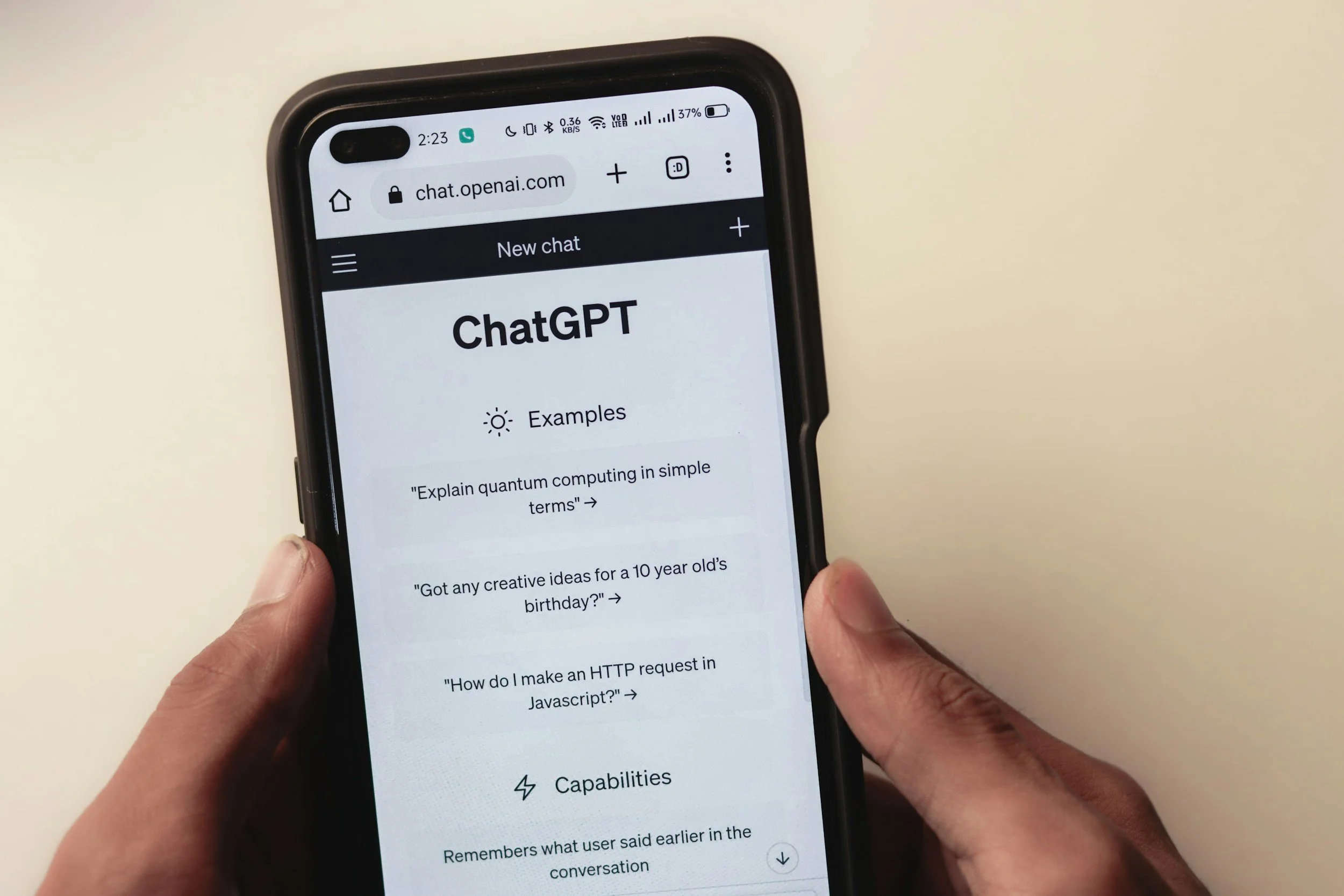
Open ChatGPT and type the question your ideal client would ask, including your city or state and your specialty. See what comes up. Then write down three things it got wrong or left out about you, or about practices like yours. Those three things are your to-do list, and they're usually fixable in an afternoon.
Let's Make Your Practice Easy to Find and Easy to Understand
If you'd like help getting your offer and your message clear enough for clients, colleagues, and AI to understand, I'd love to talk it through with you. We can look at your intensive, your page, and your profiles, so you're not guessing.
And if you'd like to start on your own, you can browse the resources in the Blueprint & Bloom store.
About the Author

Hannah Ciampini, LCSW, is a therapist and business coach, and the founder of Blueprint & Bloom. She helps therapists nationwide build sustainable, intensive-based private practices through premium offers, clear positioning, and intentional practice design.