If you're planning your first multi-day therapy intensive, the question that keeps you up at night probably isn't "what's my modality?" It's "what do I actually do from nine in the morning until four in the afternoon, and how do I not fall apart or lose my client halfway through?"
Here's the reframe: an intensive isn't a long session. It's a different container. If you try to stretch your 50-minute hour across six hours, you'll tire out both of you and miss what makes intensives work. How to structure a therapy intensive is mostly a question of pacing, rest, and safety, and you can design all three before your first client walks in.

An Intensive Is Not a Long Session
In a weekly session, a lot of the work is rebuilding momentum. You spend part of the hour catching up, part settling in, part getting to the heart of it, and then you wrap up with a few minutes left. An intensive flips that. The client arrives prepared, the work goes deeper, and you have the time to stay with what comes up instead of closing the door when the clock runs out.
That depth is the value, and it's also the risk. More time means more material, more emotion, and more fatigue. A good structure gives you a rhythm of focused work and real rest, so the depth is something you can hold, not something that overwhelms the day.
This post focuses on structure and logistics. If you're still working out the offer itself, start with how to offer therapy intensives, and for fees, see how to price therapy intensives. I won't cover pricing here.
Seven Decisions to Make Before You Schedule Anything
Before you build a schedule, you need a few answers. Write these down, because they shape everything else:
Length. How many days, and how many hours a day? Many therapists find it easier to start with a shorter format and expand once they've seen how it feels.
Block length. How long will each focused block of work be, and how long are the breaks between them?
Format. In person or virtual? Virtual days add screen fatigue, so you may want shorter blocks and more breaks.
Start and end times. Pick times that respect your client's travel, energy, and life, and your own.
Focus. What is this intensive for? One clear target, like a specific memory cluster or pattern, is easier to plan around than "everything."
Who holds what. Are you the only clinician, or is anyone else involved? Who handles scheduling, payment, and follow-up?
Aftercare. What happens that evening, the next day, and the next two weeks?
If you can answer these seven clearly, the day-of schedule almost writes itself.
What a Day Can Look Like
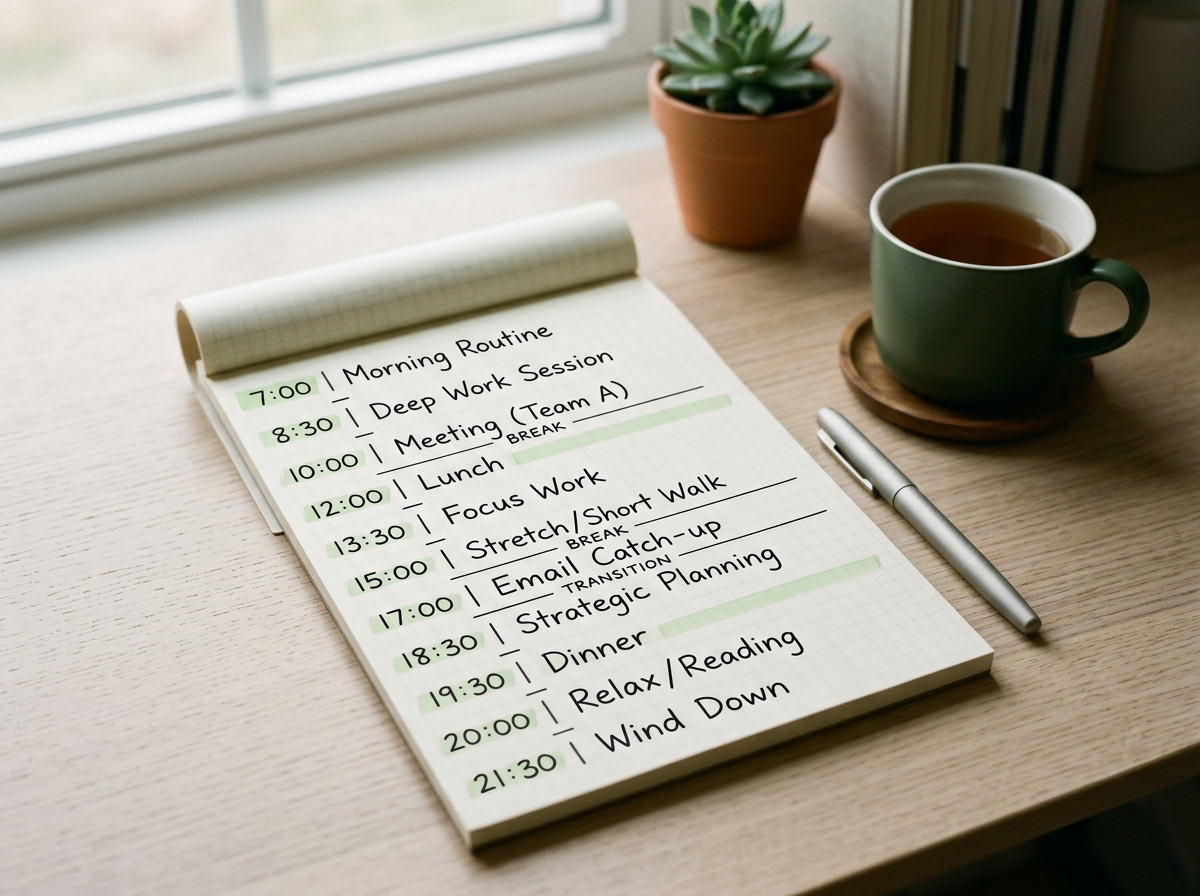
Every modality and client is different, so treat this as an illustration, not a prescription. Here's one way a day could be shaped around focused work and rest:
Arrival and grounding (about 30 minutes). Check in, review the plan for the day, settle the body, and revisit any safety agreements.
Focused block one (60 to 90 minutes). The first stretch of deeper work, when attention is freshest.
Real break (20 to 30 minutes). Water, a snack, a walk, a bathroom stop. Not email.
Focused block two (60 to 90 minutes). Continue the work or shift to a new target.
Lunch away from the room (45 to 60 minutes). A true reset for both of you, ideally outside the therapy space.
Integration or a lighter block (60 to 90 minutes). Consolidate, practice skills, or do a gentler piece of work, depending on how the client is doing.
Closing and grounding (about 30 minutes). Check how the client feels, reorient to the present, and plan the evening and the next day.
Notice what isn't on the list: back-to-back heavy work for hours. The breaks aren't extras. They're part of how the work gets processed.
Pacing: How Long Can Someone Actually Do This Work?
There's a limit to how long anyone can stay in deep emotional work, and it's usually shorter than you'd guess. Focus, emotional regulation, and memory all get tired. If you push past that point, the quality of the work drops, and clients can leave feeling flooded instead of relieved.
I'd build your pacing around your client's nervous system, not the clock. Watch for signs of fatigue, like glazing over, speeding up or slowing down, going quiet, or getting irritable. When you see them, shift to something lighter or take a break. Having a "plan B" for each block, such as a grounding exercise or a skills practice, gives you permission to ease off without feeling like you're failing the day.
The same applies to you. You'll be present and attuned for hours, so decide in advance how many intensive days you can realistically hold in a week, and protect the space around them.
Build In Safety Before Day One
A strong structure starts before the first morning. The more you've prepared, the less you'll have to improvise when something hard comes up.
Screen and prepare. A thoughtful intake helps you decide who's a good fit and how ready they are. My post on the therapy intensive intake process walks through what to include.
Agree on stop signals and consent. Clients should know they can pause or stop at any time, and what that looks like.
Have a safety plan. Know who to call if things go badly, including an emergency contact and local crisis resources, and have a plan for what you'll do if a client becomes unsafe.
Check your rules. Licensure, where the client is physically located during a virtual intensive, informed consent, documentation, and insurance or cash-pay terms all vary by profession and state. Check with your board, your malpractice carrier, or a professional you trust.
Plan the logistics. Room setup, tech, snacks, parking, tissues, and a quiet space for breaks. Small things matter on a long day.
The Evening and the Day After
Aftercare is where a lot of first-time intensive providers drop the ball, because the exciting part is over. But what happens after a long day of deep work can shape how the whole experience lands.
Give your client a simple plan: eat something, rest, avoid big decisions or stressful conversations, and move gently. Let them know that tiredness, strong emotions, and vivid dreams can be normal, and tell them when to reach out. If you work with a client over several days, leave room each morning to check in on how the night went before you begin.
After the last day, schedule a follow-up. Many therapists book a session within a week or two, because that's when integration questions come up. A workbook can also help clients stay oriented before, during, and after, which is why I created the Intensive Client Workbook.
Mistakes First-Time Intensive Providers Make
Overpacking the day. More hours doesn't mean better results. Start with less than you think you can do.
Skipping real breaks. If you eat lunch at your desk and keep the client in the room, nobody gets a reset.
No plan for strong emotion. Decide ahead of time how you'll slow down, ground, or end a block early.
Forgetting your own stamina. Scheduling intensives right before or after a full caseload day is a recipe for exhaustion.
Changing everything at once. A new offer, a new format, and a new location all at the same time makes it hard to learn what's working.
Ignoring aftercare. The days after matter as much as the day itself.
Run a Small Pilot First
You don't have to get this perfect. A good way to learn is to run a shorter pilot with a client you know well, or a trusted colleague who's willing to give feedback. Afterward, ask what felt right, what felt rushed, and what they wished you'd done differently. Then adjust the structure, and try again.
If your intensive isn't filling yet, structure may not be the real issue. I wrote about the other common reasons in why therapy intensives aren't booking.
A quick note: this post is general information about structuring an intensive, not legal, clinical, or professional advice. Rules and best practices vary by profession, modality, and state, so check with your board and a professional you trust.
Let's Build Your First Intensive Together
If you'd like help turning your idea into a clear, sustainable intensive, I'd love to talk it through with you. We can look at your format, your schedule, and your safety plan, so your first one feels steady instead of stressful.
And if you'd like to start on your own, you can browse the resources in the Blueprint & Bloom store.
About the Author

Hannah Ciampini, LCSW, is a therapist and business coach, and the founder of Blueprint & Bloom. She helps therapists nationwide build sustainable, intensive-based private practices through premium offers, clear positioning, and intentional practice design.